By Gergely Orosz, the author of The Pragmatic Engineer Newsletter and Building Mobile Apps at Scale
Navigating senior, tech lead, staff and principal positions at tech companies and startups. An Amazon #1 Best Seller. New: the hardcover is out! As is the audibook. Now available in 6 languages.
Hum Saath-Saath Hain: Why This Family Classic Still Rules the Hearts (and Search Engines)
, the film is a definitive Indian family drama celebrating joint-family dynamics and cultural values. Cast and Characters Vivek (Mohnish Bahl) : The eldest son, inspired by Lord Ram from the Prem (Salman Khan) : The sensitive and obedient middle son. Vinod (Saif Ali Khan) : The playful youngest son, inspired by Lakshman. Female Leads
Mkvcinemas is not operating under any regulatory body. Files uploaded there can contain:
At its core, Hum Saath-Saath Hain is a modern retelling of the Ramayana. The story revolves around Ramkishen (Alok Nath) and Mamta (Reema Lagoo), and their four children: Vivek (Mohnish Bahl), Prem (Salman Khan), Vinod (Saif Ali Khan), and Sangeeta (Neelam Kothari).
Popular Tracks: "Maiyya Yashoda," "ABCDEF Ghi," and the title track "Hum Saath-Saath Hain" are celebrated for their festive and devotional tones.
The search term "Hum Saath Saath Hain MKVCinemas Top" reflects a user's desire to access a beloved classic film through unauthorized channels. While MKVCinemas provides free access to such content, it operates outside the law. The film remains a cultural touchstone, but users are advised to prioritize cyber safety and legal compliance by accessing the film through authorized streaming services.
Released on November 5, 1999, Hum Saath-Saath Hain (HSSH) is more than just a movie; it is a cultural phenomenon that defined the "family drama" genre in Bollywood. Directed by Sooraj Barjatya and produced by Rajshri Productions , the film became the highest-grossing Indian film of its release year, earning a worldwide gross of ₹81.7 crore. A Star-Studded Ensemble Cast
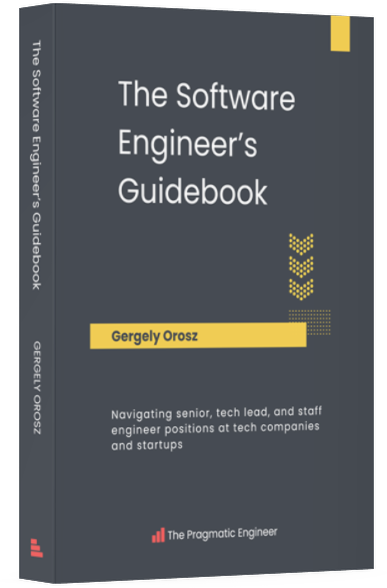
The book is separated into six standalone parts, each part covering several chapters:
Parts 1 and 6 apply to all engineering levels: from entry-level software developers to principal or above engineers. Parts 2, 3, 4 and 5 cover increasingly senior engineering levels. These four parts group topics in chapters – such as ones on software engineering, collaboration, getting things done, and so on.
This book is more of a reference book that you can refer back to, as you grow in your career. I suggest skimming over the career levels and chapters that you are familiar with, and focus reading on topics you struggle with, or career levels where you are aiming to get to. Keep in mind that expectations can vary greatly between companies.
In this book, I’ve aimed to align the topics and leveling definitions closer to what is typical at Big Tech and scaleups: but you might find some of the topics relevant for lower career levels in later chapters. For example, we cover logging, montiroing and oncall in Part 5: “Reliable software systems” in-depth: but it’s useful – and oftentimes necessary! – to know about these practices below the staff engineer levels.
The Software Engineer's Guidebook is available in multiple languages:
You should now be able to ask your local book shops to order the book for you via Ingram Spark Print-on-demand - using the ISBN code 9789083381824. I'm also working on making the paperback more accessible in additional regions, including translated versions. Please share details here if you're unable to get the book in your country and I'll aim to remedy the situation.
I'd like to think so! The book can help you get ideas on how to help software engineers on your team grow. And if you are a hands-on engineering manager (which I hope you might be!) then you can apply the topics yourself! I wrote more about staying hands-on as an engineering manager or lead in The Pragmatic Engineer Newsletter.
I've gotten this variation of a question from Data Engineers, ML Engineers, designers and SREs. See the more detailed table of contents and the "Look inside" sample to get a better idea of the contents of the book. I have written this book with software engineers as the target group, and the bulk of the book applies for them. Part 1 is more generally applicable career advice: but that's still smaller subset of the book.