Best-in-class real-time backups with superior handling and security
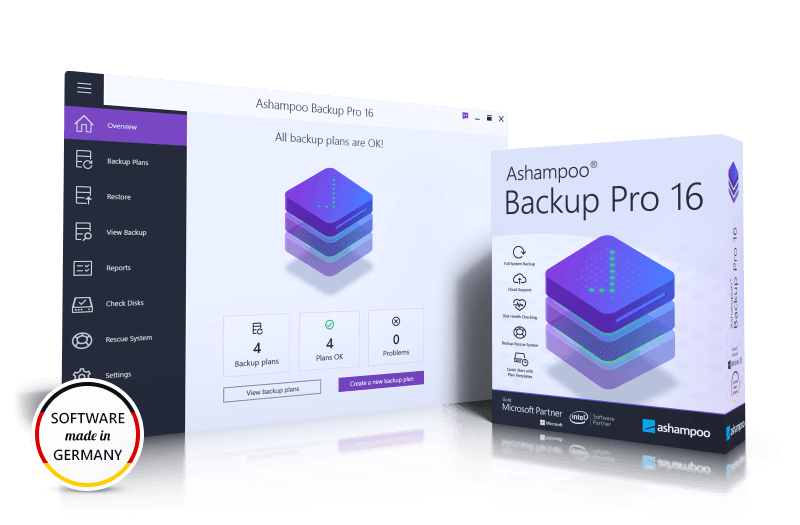
Ashampoo Backup Pro 17 takes the fear out of viruses, ransomware and hardware errors! Experience an easy to use well-designed but powerful backup solution. The new Ashampoo Backup Pro 17 offers you all possible storage options: Back up single files to entire partitions to local drives or online storage providers. In addition, the program is light on resources, gets out of your way and does all the heavy lifting in the background. Restoring your backups is super easy! Ashampoo Backup Pro 17 even comes with a bootable rescue system to restore your system in the event of major system failure!
Here's something to look forward to
- Real-time backups with file tracking
- Modern rescue system based on the latest Windows
- Rescue system with updated drivers and maximum safety
- Unlock and use BitLocker drives with ease
- Fully-automatic installation of the latest Windows ADK
- Improved Magenta Cloud support

 Real-time backups with file tracking