Open source RGB lighting control that doesn't depend on manufacturer software


One of the biggest complaints about RGB is the software ecosystem surrounding it. Every manufacturer has their own app, their own brand, their own style. If you want to mix and match devices, you end up with a ton of conflicting, functionally identical apps competing for your background resources. On top of that, these apps are proprietary and Windows-only. Some even require online accounts. What if there was a way to control all of your RGB devices from a single app, on both Windows and Linux, without any nonsense? That is what OpenRGB sets out to achieve. One app to rule them all.


Version 1.0rc2, additional downloads and versions on Releases page

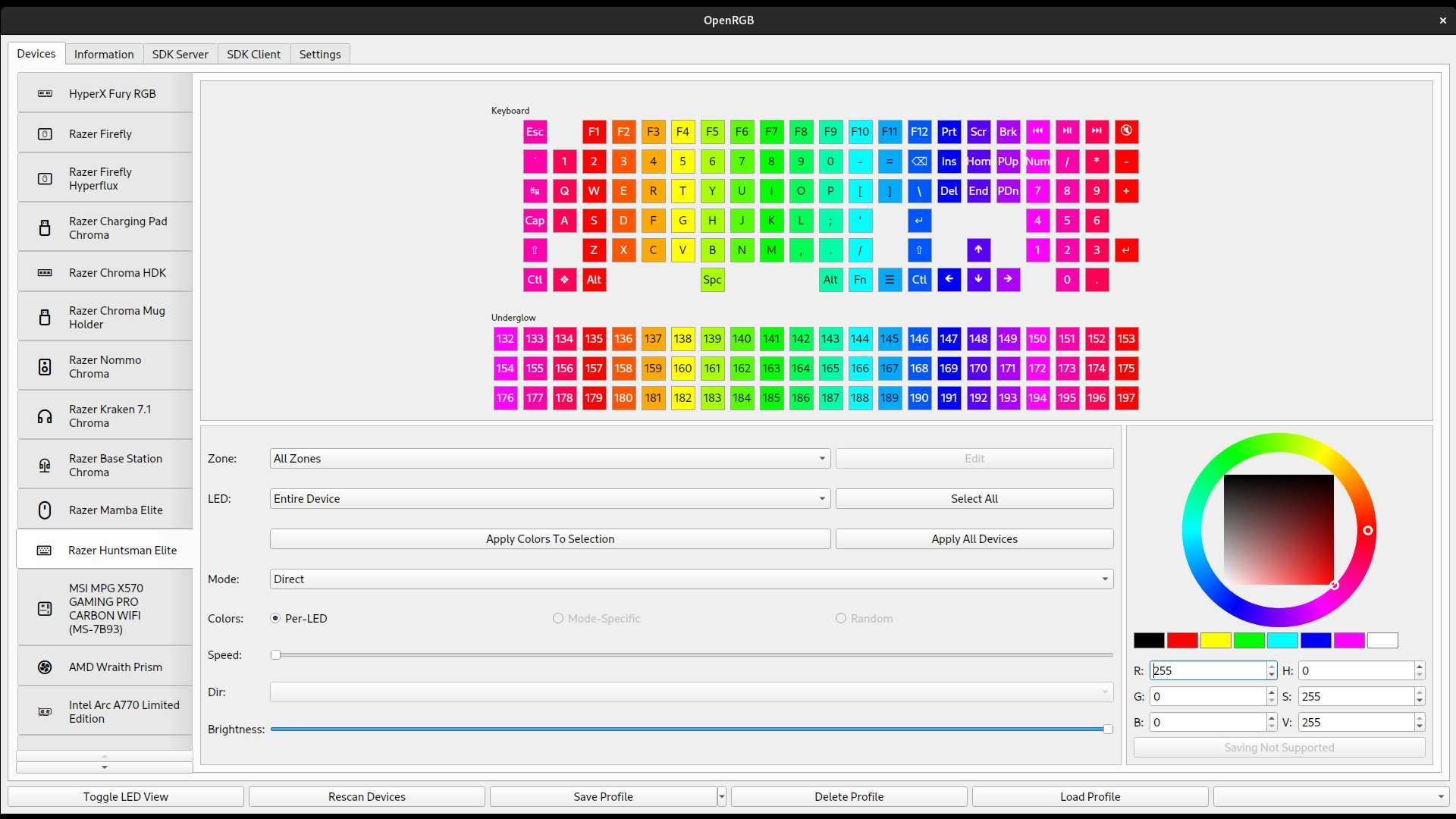
OpenRGB user interface

Control RGB without wasting system resources

Lightweight User Interface

OpenRGB keeps it simple with a lightweight user interface that doesn't waste background resources with excessive custom images and styles. It is light on both RAM and CPU usage, so your system can continue to shine without cutting into your gaming or productivity performance.
OpenRGB rules them all

Control RGB from a single app

Eliminate Bloatware

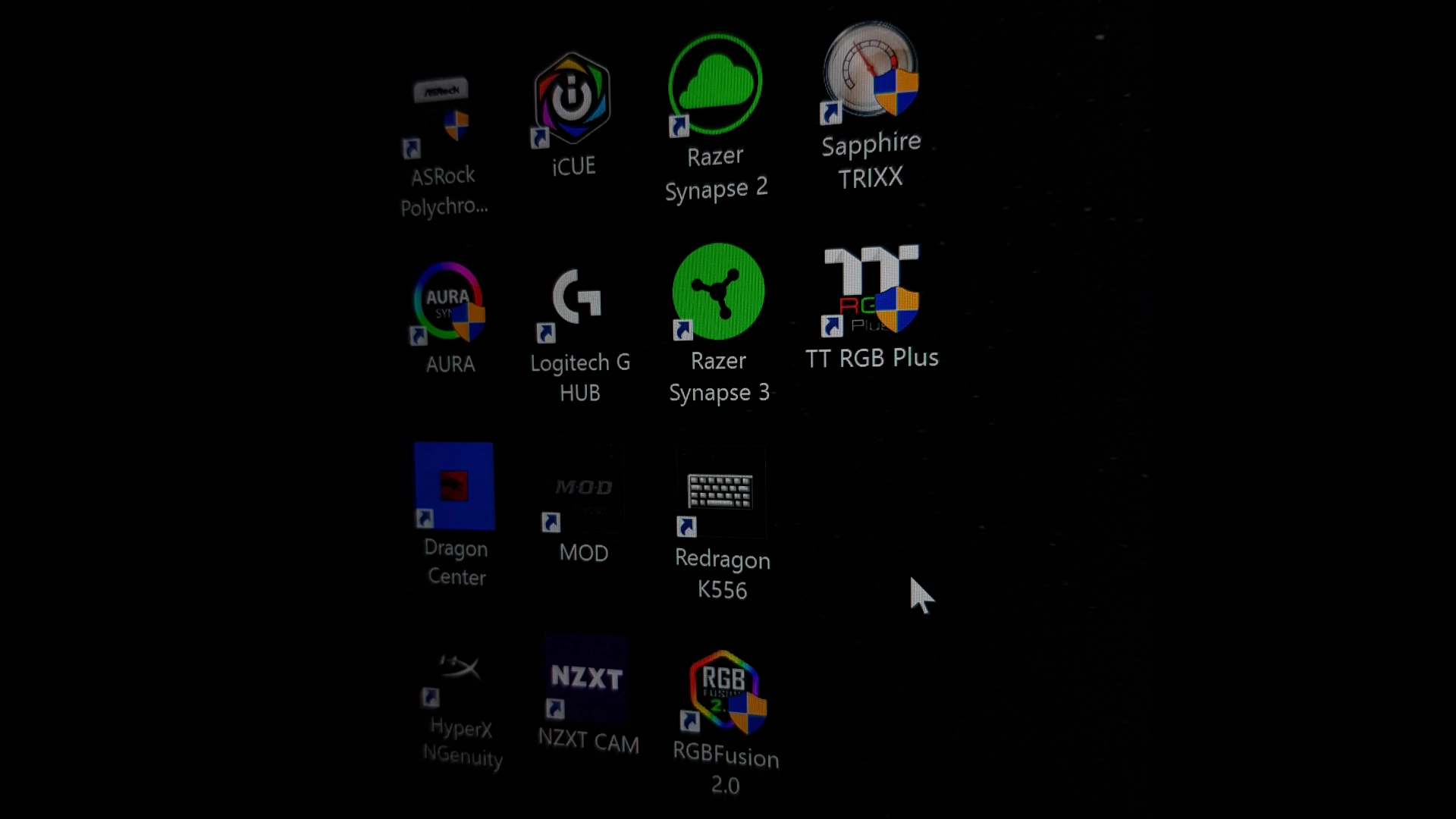
If you have RGB devices from many different manufacturers, you will likely have many different programs installed to control all of your devices. These programs do not sync with each other, and they all compete for your system resources. OpenRGB aims to replace every single piece of proprietary RGB software with one lightweight app.

OpenRGB is open source software

Contribute your RGB devices

Open Source

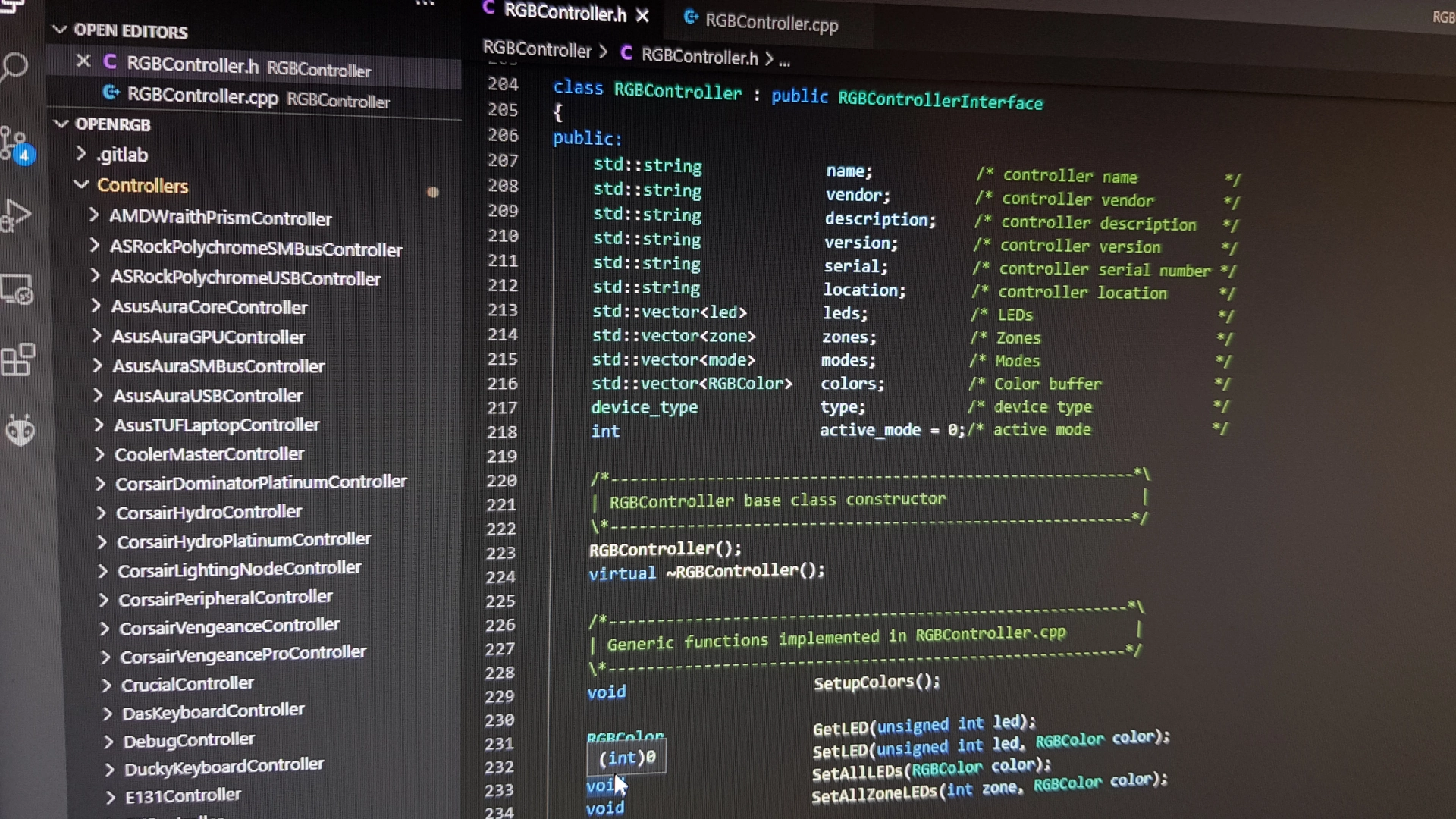
OpenRGB is free and open source software under the GNU General Public License version 2. This means anyone is free to view and modify the code. If you know C++, you can add your own device with our flexible RGB hardware abstraction layer. Being open source means more devices are constantly being added!


Check out the source code on GitLab
OpenRGB is Cross-Platform

Control RGB on Windows, Linux, and MacOS

Cross-Platform

OpenRGB runs on Windows, Linux and MacOS. No longer is RGB control a Windows-exclusive feature! OpenRGB has been tested on X86, X86_64, ARM32, and ARM64 processors including ARM mini-PCs such as the Raspberry Pi.

Elastique: Timestretch [updated]

Time is an Illusion: Unpacking the Magic of elastique Timestretch

If you’ve ever dragged a vocal acapella onto a beat that was recorded at a different tempo, or slowed a synth lead down to create a cinematic pad, you’ve encountered a piece of invisible magic. That magic likely has a name: elastique.

Extreme RatiosMost algorithms start to "warble" if you stretch audio more than 10-20%. élastique can often stretch audio by 200% or more while remaining usable for creative sound design.

Formant Preservation: This is the holy grail for vocals. élastique can shift the pitch of a voice while keeping the "formants" (the resonance of the throat and mouth) the same, making a transposed vocal sound like a real human rather than a digital artifact. The Different Flavors of élastique elastique timestretch

Key capabilities

Tags: #timestretching #audioproduction #abletonlive #sounddesign #elastique #dawwarping

Common Misconceptions and Limitations

Myth: Elastique is "perfect" and introduces no artifacts. Reality: No time-stretching is artifact-free. At extreme ratios (e.g., stretching a 1-second drum hit to 10 seconds), elastique will eventually reveal granular noise. It also struggles with dense, chaotic audio like cymbal washes or white noise sweeps. Time is an Illusion: Unpacking the Magic of

How to Choose the Right Elastique Mode

Here is a quick decision tree for any DAW that offers multiple elastique variants:

Special Feature: Formant-preserving pitch shifting for both monophonic and polyphonic material, which prevents the "Mickey Mouse" effect when shifting pitch. or fast processing

It is widely considered one of the most transparent algorithms for audio manipulation, used across professional Studio One Key Functionality: