Charlie Chaplin Silent Film Site

UNINET® has developed a series of software packages to enhance your IColor printing experience. The IColor® TransferRIP and ProRIP and ProRIP Essentials packages make it simple to produce spot color overprint and underprint in one pass. The Absolute White RIP helps you use an Absolute White Toner Cartridge in a converted CMYK printer, and create 2 pass prints with color and white. The IColor® SmartCUT suite allows your A4/Letter sized printer to produce tabloid or larger sized transfers! Use one or more with the IColor® 500, 600 and 800 series of transfer printers.
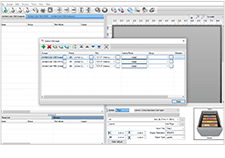
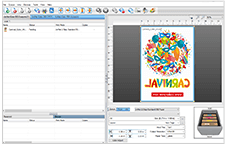
Use the IColor® ProRIP software to print white as an underprint or overprint in one pass.
This professional version is designed for higher volume printing with an all new interface. Design files can be printed directly from your favorite graphics program, as well as imported directly into IColor® ProRIP. charlie chaplin silent film
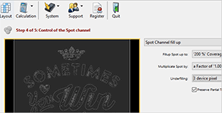
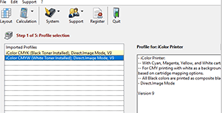
The IColor® ProRIP software allows the user to control the spot white channel feature. Three cartridge configurations are available: Spot color overprinting, where white is needed as a top color for textiles; Spot color underprinting for printing on dark or transparent media where white is needed as a background color and standard CMYK printing where a spot color is not needed. No need to create additional graphics with different color configurations – the software does it all – and in one pass! Enhance the brilliance of any graphic with white behind color! SCENE 3: LUNCHTIME – THE BREAK ROOM 2
Compatible with Microsoft Windows® 8 / 10 / 11 (x32 & x64) only. Early Life and Career Even as the industry
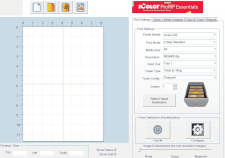
A simplified version of ProRIP which includes all of the most commonly used features of ProRIP with an easy to use interface. This Essentials version simplifies the printing process and allows the user to print efficiently and quickly without any training. All of the important and frequently used aspects of the software are included in this version, while all of the ‘never used’ or confusing aspects of the software are left out.
Comes standard with the IColor®540 and 560 models and is compatible with the IColor 550 as well.
Does not work with IColor 500, 600, 650 or 800 (yet).
Improvements over the ‘Standard’ ProRIP:
The Eloquence of Silence: Charlie Chaplin’s Cinematic Legacy Charlie Chaplin
Chaplin was not only an accomplished actor but also a skilled writer, director, and producer. He was one of the first filmmakers to experiment with narrative structure, often using non-linear storytelling and incorporating elements of drama, comedy, and social commentary. In The City Lights (1931), for example, Chaplin tackles themes of poverty, class struggle, and redemption, showcasing his ability to balance humor and pathos.
SCENE 3: LUNCHTIME – THE BREAK ROOM
Chaplin once said this was the film he wanted to be remembered by. Set during the Klondike Gold Rush, the Charlie Chaplin silent film The Gold Rush features the most famous practical effects and physical gags ever committed to celluloid.
Early Life and Career
Even as the industry shifted to "talkies" following 1927's The Jazz Singer, Chaplin initially resisted the change, believing that dialogue would diminish the universal appeal of his art. His most celebrated silent or "essentially silent" works include:
The Eloquence of Silence: Charlie Chaplin’s Cinematic Legacy Charlie Chaplin
Chaplin was not only an accomplished actor but also a skilled writer, director, and producer. He was one of the first filmmakers to experiment with narrative structure, often using non-linear storytelling and incorporating elements of drama, comedy, and social commentary. In The City Lights (1931), for example, Chaplin tackles themes of poverty, class struggle, and redemption, showcasing his ability to balance humor and pathos.
SCENE 3: LUNCHTIME – THE BREAK ROOM
Chaplin once said this was the film he wanted to be remembered by. Set during the Klondike Gold Rush, the Charlie Chaplin silent film The Gold Rush features the most famous practical effects and physical gags ever committed to celluloid.
Early Life and Career
Even as the industry shifted to "talkies" following 1927's The Jazz Singer, Chaplin initially resisted the change, believing that dialogue would diminish the universal appeal of his art. His most celebrated silent or "essentially silent" works include:
Use the IColor® TransferRIP software to print white as an underprint or overprint in one pass.
Designed for every day, short to mid run use, the IColor® TransferRIP software allows the user to control the spot white channel feature. Two cartridge configurations are available: White overprint, where white is needed as a top color for textiles; and white underprint for printing on dark or transparent media where white is needed a round color. No need to create additional graphics with different color configurations – the software does it all – and in one pass! Enhance the brilliance of any graphic with white behind color!
Compatible with Microsoft Windows 7 / 8 / 10 (x32 & x64) only.